Saturday, 7 March 2020

The Invisible Man - Cheap Thoughts

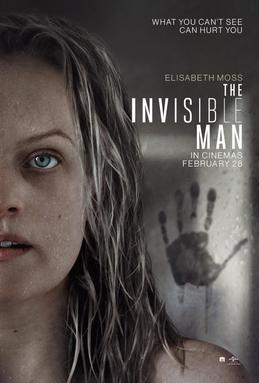
The Invisible Man (2020 film) - release poster.jpgIn a lot of ways Horror is one of the purist genres of cinema, and as bold & pretentious as an opening line like that may seem, there’s a lot of truth behind it. From film’s earliest days dating back to German expressionism, it was a genre that allowed filmmakers to experiment and challenge both themselves and the audience, giving us as a chance to explore the darker and more uncomfortable sides of humanity, to focus on the emotional rather than the logical, and more often than not the best of the genre will follow this description, The Invisible Man follows it to a tee.

Though not subtle in its message, it is in its execution thanks to Leigh Whannell’s direction and Stefan Duscio’s cinematography, highlighting the implication of what’s there, filling the frame with mostly negative space and let the lack of clues fill the audiences imagination, yet still treating the titular Invisible Man as a perceivable being and framing him as so. From scene one of our protagonist Cecilia (Elisabeth Moss) trying to sneak around the house, the tension is instantly present and never lets go. There’s an argument to be made that Invisible Man is simply using an aged formula, after all flashy comments such as “It’s what the audience doesn’t see that’s scarier” it’s hardly an original perspective, and true it’s a tested and proven system that applies to most of the best horror films, and Invisible Man is so obvious in its message that it’s hardly worth commenting on as you’ve probably already figured it out simply by the trailer.

There’s an undeniable simplicity to Invisible Man, that can’t be argued, but rather than treat that as a flaw, it instead gives way to allowing the filmmakers to craft a film with creative visuals, adapting the story for a modern setting & technology, and an emotionally raw performance from Elisabeth Moss as a broken woman suffering from paranoia, abuse and rage to combine it all into a complex protagonist who is forced to deal with the trauma of being psychologically and physically abused by this intangible psychopath.

Blumhouse Pictures created a name for themselves for developing low-budget horror films that turned a massive profit that always made them admirable from a business standpoint, but it also resulted in many years of garbage forgettable horror, but in the past several years they’ve turned that around and made them one of the more interesting production companies in the industry right now. Should this film lead to a trend of allowing auteur filmmakers take their crack at adapting the original horror monsters into a modern setting then this is certainly a strong introduction. Hell, you could probably make an argument for Guillermo Del Toro’s The Shape of Water being the one to kick start this trend with his interpretation of Creature From The Black Lagoon but after Universal’s several failed attempts to start their own reboot of these characters, putting everything into the hands of Blumhouse might not be such a bad idea if they were to turn out other stellar flicks such as this one.

-Danny

Monday, 2 March 2020

My Favourite Simpsons Episode

Image result for mother simpson pelicanRecently YouTuber Patrick H Willems made a video discussing his favourite episode of The Simpsons (https://www.youtube.com/watch?v=PWVKDPRYwg8&t=1321s) and encouraged other people to discuss their's. Naturally being as big a Simpsons fan as anyone can expect, it inspired me to delve into the subject matter and discuss what is and always has been my personal favourite episode of The Simpsons, season 7 episode 8 Mother Simpson. Directed by David Silverman and written by Richard Appel.

Much like Patrick’s video I’m going to focus on the storytelling structure of the episode and the elements at play that make this an incredibly tight plot with poignant character development and subtle foreshadowing. If you haven’t seen the episode in a while here is a recap on the episode’s events: Our story begins with Homer in an attempt to get out of doing mandatory litter pick-up with work, fakes his death to enjoy his weekend. Eventually Homer is forced to make his way to city hall to confirm he is alive, while there he learns his mother Mona Simpson is also still listed as alive, going to visit the grave in which he thinks she’s buried, he meets her there fully alive. Reunited, he introduces Mona to his family, after initially bonding with everyone she reveals her story. Back in the 60s Mona was a political activist who sabotaged one of Mr Burns environment destroying facilities, being the only identified figure, she had to go on the run to avoid prosecution. Returning to the present, Mr Burns learns of her return and informs the FBI, in order to avoid capture Homer helps her go on the run yet again, finally getting to say goodbye properly this time.

It’s amazing how in just a simple 21 minutes the writers were able to fill the story with so much set-up and pay off and no story element goes underutilised while also never being glaringly obvious in its purpose and still having such comedic irony to it all. For example, the episode opens with Homer faking his death to prevent helping Mr Burns clean up the environment, while Mona initially faked her death to prevent Mr Burns from damaging the environment. Another great example being Patty & Selma having a tombstone ready and made for Homer’s death, which is certainly in character for them but also ends up being the plot device that reunites Homer & Mona while they’re both at the graveyard, and then later on being what separates them again after the FBI are investigating the matter. Finally it being Mona’s actions in the past that cured Chief Wiggum of his asthma, and so he’s the one that helps them escape at the end of the episode.

Then there is the matter of having to develop a believable connection between Mona and The Simpsons family to get both them and us the audience invested in her, and they take advantage of what’s at hand. Mona’s big crime was being an environment activist, meaning she both cares about the environment like Lisa, while also having a rebellious nature like Bart. There’s also a joke about Maggie also embracing the rebellious nature of the hippies, which considering last season she tries to kill Mr Burns, isn’t out of character for her. When Mona is first introduced to the family Bart’s first reaction is to try and guilt her into paying him, and later on he finds her fake IDs while rummaging through her purse, he learns of Mona’s criminal activities by he himself committing a criminal activity, and she’s shown to be intellectually stimulating for Lisa and developing an instant rapport.

None of this is to say the show doesn’t offer a fulfilling relationship between Homer and Mona, with Homer it’s a different story as she doesn’t have to win him over, he already loves her and instead regresses to a childlike state to catch up on time lost. This is until we get to the end of the episode, where they finally get to say their goodbyes, and Mona bangs her head on the door shouting “D’oh!”, which is the only time the line is used in the episode, establishing it as her initial trait that was passed on down to Homer, solidifying their connection. I never would have thought a “D’oh!” could have such emotional weight to it.

Speaking of the ending of the episode, this is the moment that settles this episode as my favourite, as it contains the most emotionally intelligent and artistic frame in The Simpsons history. After saying their goodbyes, we transition from evening to night as the credits role, we’re treated to Homer sat on his car, all alone just looking up at the stars as Alf Clausen’s beautiful score plays over it. Never before or since has Homer been given such a simple moment of reflection, being on his own just to think of his emotions and without us even being able to see his face or even suggest what he might be thinking of feeling, it entirely being left to the audiences interpretation, it’s a moment filled with such nuance, I cannot think of a time where Homer has been treated with such emotional dignity.

The Simpsons (1989)


This is not the first time The Simpsons has told deeply emotional stories. Other episodes such as Lisa’s Substitute, Bart Gets An F or The Way We Was have all done this before and are fantastic episodes in their own right, but what this episode has over them is I think it is equally as funny as it is emotional. Now analysing comedy is difficult to do, especially in The Simpsons where it can easily dissolve into just simply listing all the good jokes because they’re so good they don’t need explaining and to do so would just spoil the humour…but I’m still gonna do it.

“Damn you Walt Whitman! Leaves of Grass my ass!” – A perfect blend of expectations being both met and broken. Homer knowing who Walt Whitman was is unexpected, but his critical review being “Leaves of Grass my ass!” is very much in character.

Moleman being buried alive – Moleman suffering is always funny, him being too polite to mention being buried alive makes it even funnier.

A Pelican vomits a fish into Homer’s pants – Speaks for itself

FBI Agent Joe Friday – Half of the comedy in The Simpsons comes from the incredibly talented voice cast. Harry Shearer delivering such a monotone yet no nonsense fast talking Noir Pastiche makes every line this character says quotable and hilarious.

It is in my opinon Mother Simpson is the only episode of The Simpsons that strikes a perfect balance between great comedy and great drama, while being an incredibly tight script and artistically beautiful, and it is my favourite episode of The Simpsons.

-Danny
Saturday, 29 February 2020

Onward - Cheap Thoughts

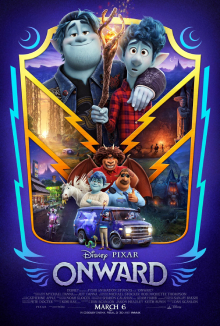
Onward poster.jpgIt must be unfair to be Pixar. A new Dreamworks film comes out and people would like it to be a poignant work of animation, but they don’t always expect it. Even Disney Animation these days less and less people would assume they’ll be left an emotional wreck by the end. Illumation is…well, not even expected to be good, let alone be great. Pixar is a different story, most people go in with the expectations of “Make me cry dammit!” because here we are 25 years since their feature film debut and they are still capable at telling hauntingly beautiful stories. The problem these days being it’s no longer a guarantee but more like a coinflip.

In a way Onward's biggest problem is a meta-narrative of it’s own existence. The film’s protagonist Ian (Tom Holland) worries he’ll never live up to being a great man like his father, likewise Onward doesn’t live up to being as great as its company’s legacy.  Truth be told, Onward is fine, it has a basic script with likeably characters, some good comedy, and several successful attempts at creative and dramatic storytelling (Lots of misses, but not all). If this were a film by any other company it would have been given a pass, but this is Pixar, just being okay is not enough, and no it’s not fair, but it’s the world we live in.

Set in a fantasy land mixed with modern day technology, our film sees two brothers Ian and Barley (Chris Pratt) learn of a spell that will bring their father back from the dead for a single day, and so they set off on a quest to try do so within 24 hours. Now a simple plot does not make a bad film, even being able to predict everything that comes doesn’t guarantee a bad film, but when you can feel the tropes slot into place and have characters move from point A to point B like the script is a chess board and the characters the pieces, any natural sense of progression for the characters is completely removed, no emotional growth or regression feels earned, everyone behaves in the particular ways the script needs regardless of whether it feels right.

This doesn’t mean the whole film is like this, there are moments where character goals and the natural momentum of the plot come together, a great example is one of Ian’s goals to be learning how to drive and the way this plays out in the film is an incredibly fun scene. Likewise there are moments that are quiet and where characters can express their emotions without it feeling forced, such as Barley’s last memory of their father, and again, the way it plays out by the end of the film feels very mature and proper. These moments however are the exception not the rule.

The only element of the film that feels true to Pixar quality is the animation, which yet again is beyond stellar, with their focus on detail, realistic in-camera effects and beautiful lighting, it’s the one thing they will always be the untouchable kings of CG Animation.

These aspects are what technically saves the film, but only in the sense that it survives, not so much thrives. It’s unlikely anyone will walk away hating the film, Pixar have certainly made worse, but when it comes to a company with standards this high, simply being okay might still be enough to kill it.

-Danny

Saturday, 22 February 2020

My Hero Academia: Heroes Rising - Cheap Thoughts


There’s going to be a lot of similarities between this review and the one for One Piece: Stampede, simply because the same rules apply, if you’re not a fan of the franchise already then just skip this film, this review will be written from the perspective of a fan as those are the ones the film is targeted at. Admittedly this isn’t entirely the case for My Hero Academia: Heroes Rising as the film does make the attempt to explain the world and the characters should any newbies be watching this film as their introduction, but even then it comes more to the film’s detriment than anything else. Even if you were to fully understand everything, that doesn’t mean you’ll care about everything, there’s a difference between explaining the story and experiencing the story.

Between this film and the prior instalment in the franchise My Hero Academia: Two Heroes the film’s have a clear goal, to fulfil audience desires by presenting what couldn’t be done in the main series. In the first film’s case that was showing Deku (Justin Briner) and All Might (Christopher Sabat) fighting side by side, though that was a moment that came at the end of the film leaving the rest rather forgettable and barren. This time round however, the film is more well-rounded, as we follow all of Class 1-A open their own hero agency on a small humble island, initially helping everyone with remedial tasks, but eventually when the villains show up they all have to fight to protect the citizens of the island. One of Kōhei Horikoshi’s strongest talents as a writer is getting the audience invested in characters within such a small amount of time, that being said he has chocked his story full of so many characters that some are yet to receive any kind of development or purpose, and that includes about half of Class 1-A, who are finally given their chance to shine and offer something of value, the highlights include Tokoyami (Josh Grelle), Sero (Christopher Bevins) & Aoyama (Joel McDonald) who are given more relevance and screentime here than they probably have in the main series as a whole. That being said this also highlights the uselessness of certain other characters, specifically Hagakure (Felecia Angelle) who is the only member to literally not contribute anything, whether it be through the simple tasks helping the townsfolk early on or in the climactic battle at the end of the film.

Speaking of said climactic battle, which is frustrating because there is very little that can be said without spoiling it, yet again it ends up being the highlight of the film, boasting the strongest animation in the franchise to date, beautiful music, great tension and acting on a higher scale than any other fight scene in the franchise can come even close to. Unlike the prior film it doesn’t overshadow the rest of the film by making it seem irrelevant, but instead building on top of what came before to give us the showdown we deserve. There are certainly more plot related issues with the final fight, mostly from a continuity breakdown in order to make it happen, and like every non-canon Shonen film, there’s always a fine line between experimenting in a non-canon story and full on breaking continuity so far that all tension or believability has been lost.

If you’re a fan and you don’t see Heroes Rising you’re not going to miss out on much, after all it’s a non-canon film meaning character development and major story beats are kept to a minimum. That being said, it is a film that offers fans the best kind of fanservice, stellar animation, creative fight scenes and characters being used in fresh and interesting ways. 

-Danny

Monday, 17 February 2020

"It's Just A Kid's Film"

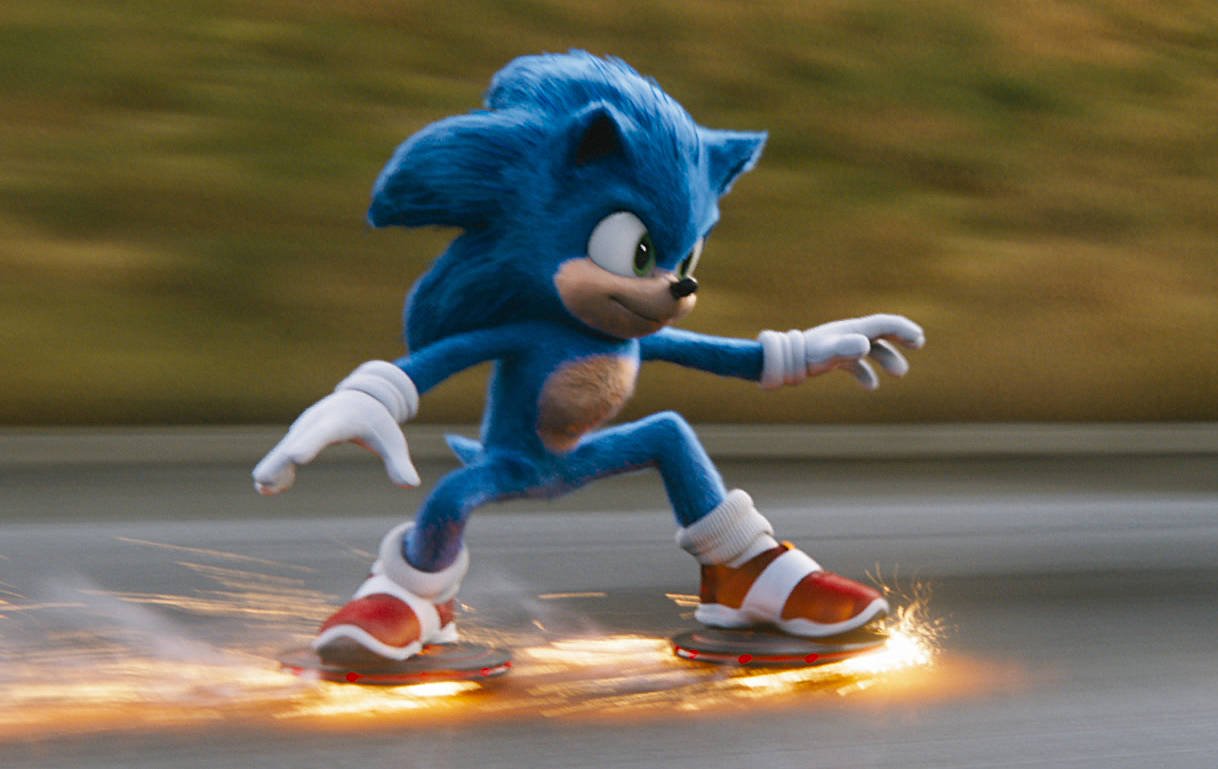
Image result for sonic the hedgehog filmI did not expect Sonic The Hedgehog to be such a divisive film. In my review I complained that the film pushed the definition of average to such intensity that it somehow broke through definition and became bad, comparable to other CGI/Live-Action hybrids such as Hop or Alvin & The Chipmunks. Nothing offensive or upsetting about the film apart from how unbearably simple it was, to which I shouldn’t be that surprised that this doesn’t detract from the film for a decent number of people, something being simple doesn’t mean bad, it just means easy to understand and hopefully the jokes and characters are entertaining enough that they can carry the rest of the film, for which it does for many.

I’m not overly bothered by this argument, after all there are plenty of films that I like which others could claim are just average but sprinkled in enough positives to leave a good impression overall. That being said, one comment that I’ve seen come up several times amongst critics and friends who liked this film is the relic of “It’s a kid’s film” to which translates to “This would entertain a small human and therefore I’m not going to critique it properly”. That might sound harsh, but it’s an argument that I despise because it’s giving a free-pass to lazy filmmaking who feel the need to spoon feed the feelings and arcs of their characters as if the kids watching as if they were idiots. I’m not going to go easy on bad kid’s films when there are plenty of other films aimed at children that do try to create engaging, creative and even important works for their target audience.

Don’t misunderstand me, not every film aimed at children needs to be Inside Out. I don’t need Sonic to be explaining depression to me. The logic behind this argument seems to be that because kids won’t be as tired of formulaic plots the same way adults will, that makes it okay. Here’s the thing, going by this logic, you could show kids basically anything as long as it was flashy and easy to digest because they don’t know the difference between good and bad films, but that’s exactly why we should be more critical of the ones that don’t try, by giving them a free pass it just lowers the bar on what we’ll accept as “good enough” films for the younger audiences. Secondly is that it kind of gives kids less credit as an audience, unless they’re two year olds who still barely have a grasp on logic, there’s plenty of work out there that does entertain and challenge these young audiences, even if they’re not bothered by the formulaic nature of these type of films, they do still recognise the formula, and even if it doesn’t bother them, it’s not exactly going to be a film that leaves much of an impact.

Think of your favourite films from your childhood, the ones that left an impact, more often than not they’re the ones that did something different, films that tried harder than others and meant something to you. I think of films like The Land Before Time or The Prince of Egypt that felt like they were discussing mature subjects with me, even if I didn’t recognise that feeling at the time. Or even films like Shrek or The Emperor’s New Groove, they’re not necessarily mature, but they still stood out for doing something different, and because of that misfit behaviour made them entertaining and everlasting. It even works for bad films, a decent part of my generation is nostalgic for the live-action Scooby-Doo films, they’re by no means good films, but they are still weird films that tried something new, they failed, but they were remembered for it, and have developed somewhat of a cult following nowadays. It’s why I argue being average is worse than being bad, because if you’re just going to be forgotten wastes of time, then what was the point of them in the first place?

On a more personal note, I hate people using this justification towards me as if I don’t take into consideration the target audiences for these films. I’m not going into Sonic the frigging Hedgehog with the same expectations I would for something like Parasite or 1917. I know different films have different goals, it’s one the simplest things you need to understand about cinema, you don’t need to be a critic to know that, so I very much don’t appreciate the implication that a kid’s film’s main goal is to entertain children is something I'm unaware of. I also know what makes a good or bad film for kids, its why I wouldn’t say I hate the film because it doesn’t spread any bad messages, but it also means I’m going to be more critical that thinking they can get away with lazy storytelling because they’re expecting their audience to not care.

So, TL;DR? No, it’s not just a kid’s film, it’s a lazy kid’s film, so it’s a bad kid’s film.

-Danny

Saturday, 15 February 2020

Sonic The Hedgehog - Cheap Thoughts

The more movies you watch, the more you realise that sometimes a mediocre movie can be even worse than a bad movie. Sonic The Hedgehog is soft, simple and pandering with little to actually offer to make it a memorable experience. It’s almost difficult to explain the basics of the plot because if you’ve seen any movie, literally, any movie then you’ve seen this one. A film that begins In Media Res by cutting straight to the climax to show Sonic (Ben Schwartz) running and Dr Robotnik (Jim Carrey) blowing up the scenary in casualty-free mayhem and destruction because the film is so desperate to grab your attention that it feels you’ll be bored by the character set-up that’s to come because it knows it won’t interest any audience. Following that is a completely inconsequential and unfitting backstory that shows Sonic being raised by a wise owl (A new creation for the film) who within less than 2 minutes sends Sonic away and is never seen or mentioned again. From there is where the film becomes the formulaic blur.

Sonic is being hunted by the government, meets Tom (James Marsden) who agrees to take him on a road trip to San Francisco to find his way to freedom. Along the way the two make it explicitly clear what their goals are and has character arcs spoon-fed to you like a baby. Because it honestly seems this film was made with the mindset that this would be the first film you have ever seen so it needs to make everything blatantly obvious. For example, it’s established early on that Sonic is lonely, and has spent several years by himself and is desperate for friends, in one moment where the film goes quiet to express that Sonic is alone, he then has to verbalise this moment by saying “I’m alone” as if you couldn’t quite get that. Continue that method of storytelling for 90 minutes and you have this film.

There’s something upsetting about making a Sonic film without any teeth. By modern standards, Sonic The Hedgehog is not cool or edgy, but he is cool and edgy for kids. He has a carefree attitude who rebelled against authority, did what he wanted and stayed cool in every situation with a cheesy family friendly rock soundtrack backing him up. This Sonic is cowardly, and desperate, and is constantly shouting one-liners and soon to be dated pop-culture references that offer no comedy or charm. Finish it all off with a white bread hip hop tune during the end credits and you have the perfect representation of removing any appeal that came from this character in the first place. It is somewhat of a conundrum to describe this film as identical to every other movie made when it’s simultaneously a film that will be forgotten as soon as you go the bed tonight, except for of course the few moments of deeper fan-service that at most equate to chuckle worthy gags and promises for better movies in the future because this film didn’t have the guts to commit to the franchise it was adapting.

It’s at a point where it might have been better to keep the original design and for the film to crash and burn, because a car crash is more interesting to watch than the fender bender that is this film.

-Danny

Wednesday, 12 February 2020

The Use Of Cassandra Cain

Image result for cassandra cain birds of prey
This is probably the main thing above all else that stuck out to me about Birds of Prey but I chose not to include it in my review because it didn't really fit the format and was much more of a personal gripe on how they adapted this particular character and therefore wouldn't necessarily effect everyone's experience with the film. Naturally as a fan of the comic book counterparts of these characters I am quite defensive of them, this isn't the first time I've made a post about this, but I hope this doesn't come across as basic whiney fanboy complaints, and if it does, well...that's why it was left out of the review.

For anyone unaware of the comic book origins of Cassandra Cain, she was trained from birth to be the ultimate assassin, not even learning how to speak or write, because of this by the time she turned 18 she was a master in hand to hand combat and depending who you ask, quite possibly the greatest physical fighter in DC Comics. However once she finally killed a person for the first time, the action disgusted her beyond belief and she swore never to take a life again. Eventually she would go on to become the new Batgirl and later take up her own alias of Orphan, slowly learning how to read & talk and overcome her own disabilities.

TL;DR: She’s a master fighter, doesn’t kill, and is a mute.

Compare that to the film version where she is helpless, murders at minimum 2 people (Both via explosion oddly enough) and can talk very easily. Basically, put the film version has nothing in common with the original version and I have no idea why they chose to put her in here if they weren’t going to do anything reflective of her character. My assumption is they wanted to have Batgirl in the film and for one reason or another they couldn’t have Barbara Gordon so they went with the next option? Even though she never dons the Batgirl costume or does anything relevant to that persona. The funny thing is, the majority of what film Cassandra does and acts like is very similar to that of Jason Todd, but assuming they either couldn’t or didn’t want to use him then why bother adapting this character in the first place? Why not create someone entirely new?

I’m aware that for adaptations their have to be changes, but if you’re going to strip away all of the elements that make Cassandra Cain who she is and create an entirely new character then what is the point? As a stand alone character, film Cassandra is not a bad character, but when I have another version of the character to compare it to? In my opinion, the comic book version is better in almost every single way, she’s someone who possesses a level of empathy practically unmatched, her belief in the symbol of the Bat goes beyond Bruce Wayne or anyone in the bat family. The conflict between her given purpose, her views on death and desires for her own identity are complex & interesting. The contrast between her being one of the greatest fighters and balancing that with her disabilities makes her unique.

It’s difficult to be supportive of the film Cassandra when I know how much better it could have been done, and this isn’t comparable to a bad adaptation of Superman or Batman, those characters get adapted a thousand times over that there’s plenty of room for variation, and inaccurate portrayals can be shrugged off. In the case of Cassandra this is her first live-action adaptation and to intentionally stumble and fall this badly is baffling.

So yeah, there’s some more rambly thoughts on Birds of Prey and how they used Cassandra. I’m sure this didn’t come across as well-thought out and was mostly nitpicky complaints, but again, that’s exactly why it wasn’t written for the review and was just a chance for me to get some gripes I had out.

-Danny