Wednesday, 5 October 2016

My Favourite Films - Wolf Children (2012)

Mamoru Hosoda, a man I’ve talked about several times on both this blog and my YouTube channel as being my favourite Japanese director, but I’ve never really had a chance to talk about my favourite of his films, that being: Wolf Children. So let’s discuss it. Wolf Children is a 2012 Japanese animated film directed by Mamoru Hosoda and follows the story of a young woman named Hana who falls in love with a werewolf and has two children with him, Ame & Yuki but ends up having to raise them alone and as you can imagine, raising two children who can transform into wolves at will on your own with little knowledge on how werewolves work can be incredibly difficult.

I’ve said before that the reason why I love Hosoda’s work is because he always knows where to put focus. While not everything in his films are as developed as they could be, that’s usually because Hosoda will identify the most important element and give all of the attention to that, whether it be a plot point, a character or a theme or even the animation. And usually he is spot on with his pick and is what ends up making his films work so well, in this case, the focus is on Hana and the struggles she faces with trying to raise these two kids. Raising two kids on your own is tough enough, having to do it while also keeping their identities a secret because they’re also wolves is near impossible. For example, what if the children are sick or injured? She can’t take them to a doctor or else they’ll be taken away and experimented on, but even if they found someone they can trust, how do you treat someone who is half wolf? So this leads to her moving out to the countryside and learning all of these skills so she can safely raise them on her own, having to go through all of this effort, all this failure, all this pain and not once ever complaining about it. I mean she of course has her breakdowns, who wouldn’t. But she never shows weakness in front of her kids, she never lets it show how much stress she is constantly going through because her entire motivation is making sure her kids grow up healthy and happy, and by god if I don’t respect the hell out of this character for everything she has to go through in this film. This is one of the best mother characters written in a film because of how much she goes through while dealing with it in a realistic way and giving her absolute all for these children. Out of all of Hosoda’s films, Hana is my favourite character because of how complex, well developed and hard-working she is.

The children themselves also receive a fair amount of development as well and are made interesting. At first the two are both annoying, disobedient and fight like regular children would, which helps to make them feel all the more realistic. Which is strange how much I’m using that word in a film about children werewolves, but that is the truth, Hosoda did a brilliant job at taking this fantastical concept and placing it in a realistic environment with realistic characters, making the story more humbling and therefore effective. But to go back to the kids, it is interesting how they both start off in one place but end up completely opposite from where their character arcs begin. Yuki being the elder child is the one who fully embraces her animalistic side, she loves being a wolf so much that sometimes she’ll accidentally turn into one without her even noticing. While Ame is the younger sibling and is much more introverted and shies away from anything that makes him different. As the film goes on and the two start school, in one of the best uses of the lateral tracking shot I’ve ever seen, we see how these character’s personalities completely shift where their comfort lies over several years. Yuki being the extrovert becomes very active in school, makes plenty of friends and enjoys her time in society, while Ame feels even more outcast than ever and finds more comfort in time spent away from society. So these two characters completely trade character arcs halfway through the film and it is done so effortlessly and so naturalistic that I found myself saying “Well yeah of course that’s where they would end up, how did you not see that coming?”. Which if that isn’t expert writing, being able to have a very obvious character arc yet have it be hidden in plain sight then I don’t know what is.

As for the animation, again this goes along with what I’ve said prior, Hosoda is a man who knows which elements to emphasise, he’s also someone that judging from his films tends to prefer motion of detail, which is seemingly the opposite to what most anime fall back on, even the films. The best example of this most people would point to is when Hana, Ame & Yuki are running through the snow, and while that is beautiful and shows Hosoda’s great use of colours to create comforting images and a beautiful environment. I personally think its best scene near the ending, where Yuki is in the school and Ame runs off into the forest. Now this could be because I find this to be a pinnacle moment with a combination of writing, acting, music and animation all come together to make something that could truly be called beautiful and I think is one of the best scenes in all of anime.

Sadly the only negative drawback from Hosoda’s style of filmmaking is that it means there isn’t that much to discuss so this post might be a little shorter than the others. But even if all of his elements aren’t great, the things that are…are truly outstanding.


-Danny

Tuesday, 4 October 2016

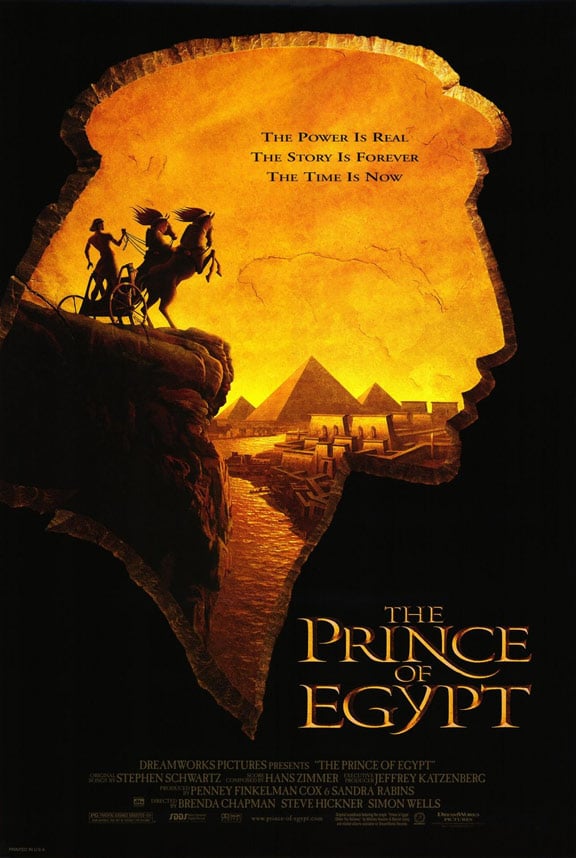
My Favourite Films - The Prince of Egypt (1997)

Fun Fact: This is my third time writing this, the reason why I keep finding myself having to redo it? Mostly because I ended up rambling on other subjects and not really focusing on why this film is so good. By that I mean it became a big comparative piece, talking about how this film is better or worse than The Ten Commandments or Disney. Which is not an unfair comparison to make but even still that took up the majority of the piece and I don’t want this to be a reactive series where I say “this movie is really good compared to this” because a legitimately great movie should be great on its own. Now that doesn’t mean I won’t be drawing comparisons to work where necessary in this series, after all context can mean a lot and besides I already did that with the Ninja Turtles post. But I don’t want that to be the majority of the post, so I might draw some comparisons here, just not a lot. So, enough babbling, let’s get to the film.

The Prince of Egypt was directed by Brenda Chapman, Steve Hickner & Simon Wells and stars Val Kilmer as Moses and Ralph Fiennes as Rameses. It follows the Moses story, which if you don’t know that tale…Google it. But I’m assuming you will know it because it’s just one of those tales that whether you believe it or not has become a big part of western folklore along with The Ugly Duckling and Jack & The Beanstalk, you’re just kinda expected to know them. So, with a tale that is as old as time and already has what is already considered to be the definitive version of this story, directed by one of the greatest directors of all time and starring one of the greatest actors of all time? Simple. You look at where that version faltered, make that your focus, and you make it excellent. In this case, the relationship between the hero and villain.

Look even if you’re a diehard fan of the original Ten Commandments kind of dropped the ball when it came to remembering that Moses and Rameses are supposed to be brothers. Yeah okay, not blood related, but for the majority of their lives they thought they were and should love each other like they were. But even when Moses leaves and comes back years later, Rameses doesn’t really react to seeing his brother for the first time in years. That’s not the case here. The majority of Moses’ time spent as royalty is spent with his brother, developing the relationship, showing them bonding while also establishing what will eventually tear them apart. Even with the two are royalty, Rameses being the older brother is the one who will inherit the throne and has a lot to live up to, plus with a father as mentally abusive as you can get, Rameses kind of has an inferiority complex, always having to live up to the impossible standards set by his father and any kind of compassion of even just humanity is a sign of weakness. Meanwhile Moses realising he’s actually born a slave, goes on the run, finds god (literally) and now with a purpose in his life means his goal will cause Rameses to lose a fair portion of his power. So what we have here is two brothers who love each other but have to fight each other on behalf of their higher power that has manipulated them into being where they are today.

That’s the major conflict here and it is done to perfection, you see the legitimate bond the two have growing up and once Moses returns they’re not instantly at odds. They try to talk to each other, find a compromise, but both are forced to stand their ground, Rameses through decades of emotional manipulation and Moses through…well, god, it’s kinda hard to argue with him. Which is another point to make, even outside of this relationship, the two are still interesting characters with great conflict, especially Moses. Again, not to turn this into a reactionary discussion, Moses always seems a little…too okay with everything god is doing, even with all the killing and suffering innocent people have to go through. This Moses seems much more at odds, during the plagues sequence (We’ll talk more about in a minute) he says the line “This was once my home, all this pain and devastation, how it tortures me inside”. Moses is humanized in this version instead of being a noble perfect figure to lead, which not only works for his character but also makes the contrast between him and god much more effective, he almost seems afraid of doing the lord’s bidding because, again, it’s god, you don’t really say no to that. As the film goes on and Moses is forced to commit even more heinous acts you see it break him down as a man, this is best seen after all the first borns die (Again, we’ll get to that soon) and he breaks down crying in the streets for a horrific act that god has made him commit. This Moses is much more identifiable and more complex as a character and while some might prefer the Charlton Heston version where he seems unbreakable, I just find this version a little more unique.

By the way, this film doesn’t hold back or censor the original story. River of Blood, Death of the First Borns, it’s all here. You just kind of have to respect a movie for adapting a classic disaster of literal biblical proportions and faithfully adapting it. Well with that being said I don’t know the ins and outs of the Moses story, but enough to know that it wouldn’t have surprised me if half of this stuff was cut for the sake of seeming more “child friendly”. But with that being said that’s not to say the story is told in its full, a lot of the supporting characters get side-lined or cut out all together and the ones that remain don’t receive that much development. But again, the focus is on the two brothers as it should be.

Alright, now getting back to those two sequences I talked about. Yeah this is film is beautiful. Like, one of the best looking animated films I’ve ever seen. The blend between traditional animation and CGI works surprisingly well when very few films are able to achieve that. But even more so the use of colour is astonishing, I don’t think anyone has ever made brown look so vibrant and full of life. The cinematography is excellent at creating unique imagery as well as telling the story visually. But above all else, the lighting, the contrast of bright colours and shadows is beyond outstanding. It’s hard to describe, especially when this is a text post so just watch the two videos of my favourite sequences, the ones discussed above, The Plagues and Angel of Death.

Which is another thing to praise the film on, using all the elements of it’s genre, form and medium to tell the story perfectly. Knowing when to use music to progress the story and develop characters, and what sequences to be told simply through visuals with minimal-if any-dialogue. These are all signs of great filmmakers who understand the tools they have and uses them brilliantly. Let’s not lie, the Moses Story is a long fucking story, and musicals is one of the few genres that can squeeze entire acts worth of character development and plot into just 3-4 minutes, this film uses that tactic to take some of the more elongated sequences and tell it in a visually interesting and abridged way without losing any of the emotional weight that comes with them, hell, if anything they’re made even more powerful.

Beyond that, the music is also a great listen, both the score by Hans Zimmer, which might be his best work just under Lion King, especially the Burning Bush theme which is one of the most hauntingly beautiful pieces of work he’s done. The actual soundtrack by Stephen Schwartz is also superb. While granted I don’t know if I would compare it to some of the Disney soundtracks of the 90s, mostly the work by Alan Menkin, the music is bombastic, the lyrics are poignant and its overall memorable, creative and is just another great element to this film.

Overall this is one of the best films DreamWorks ever made and it’s a shame they don’t promote it as much. Sure it doesn’t fall under their usual brand but it’s still a damn well made film and deserves more attention from both DreamWorks and general audiences. The characters are great, the music is great and the animation is outstanding as all hell. It’s one of DreamWorks’ best and it’s one of my favourites.

-Danny

Sunday, 2 October 2016

My Favourite Films - Harvey (1950)

I’m not gonna lie when I set out to start this series and took a look at most of my favourite films (Excluding the top 20) the majority of them were from the 90s to 2010s because I was born in the 90s and raised in the new millennium, meaning of course I would be shown films from that time period and shaped me as a person as well as my personal views on cinema, meaning I naturally have a preference for more modern films made with styles that I easily identify with rather than black & white films made by what were revolutionary filmmakers but don’t necessarily seem it by today’s standards. Which isn’t to say I didn’t watch any classic films as a kid and don’t love them, it’s just that they’re the exception rather than the rule. So in the future expect a lot of films to be featured from that time period because that’s just how it is, I can’t go back in time and change what films I was raised on and let’s be honest with each passing year it becomes less and less likely a film would be identified as one of your favourites seeing as what qualifies as a “new experience” is rarer to come by. With that being said let’s talk about a classic that I saw only a year or two ago and fell in love with. Harvey starring Jimmy Stewart and directed by Henry Koster follows the story of Elwood P Dowd, a seemingly nice & harmless grown man who gets by thanks to a large inheritance and spends his time trying to make other people have a nice day, oh he also happens to have an invisible talking rabbit friend called Harvey who follows him around everywhere that only Elwood can see and speak to and everyone thinks he’s crazy.

Like Ed Wood the main reason why I love this movie is the protagonist, the big difference here is I’ve already talked about Elwood in a prior blog post so I’m probably going to be repeating myself quite a lot here. But to try and bring a fresh take to discussing this and assuming you didn’t read that post, let’s get into it, why do I love Elwood P Dowd? He’s nice. That’s it. He’s nice. Look I’m sick of audiences and storytellers thinking the only way to have an interesting character is to have someone who is constantly miserable and hates their own lives, don’t get me wrong that works in moderation but what really salts my apples in this regard is that people think if that’s the only way to make a character interesting and complex then ergo the opposite of a character being pleasant and happy in life instantly means they must be boring. My argument against this: Elwood. The man really doesn’t experience any kind of conflict or stressful situation in the film but instead spends all of his time making life better than everyone else, which is another type of character I love, the ones that don’t let the world change them, but they change the world. Throughout the entire film Elwood is doing a whole bunch of small deeds to help everyone else out, buying them drinks at the bar, paying someone a compliment, basically anything that’ll make their day just a little bit brighter. "every day is a beautiful day" "you make my flower look beautiful" "you can never have too many friends" these are all actual lines of dialogue said by this man and goddamn if he isn’t absolutely charming because of it. And somehow they do all of this while also keeping him very humble, never thinking he’s better than anyone, showing everyone that will accept it the time of day and just being an all round pleasant guy.

It's made even more impressive considering how privileged a life he leads. A rich white man with no responsibilities and all the free time in the world? I think if reality has shown us anything it’s that these people tend not to live their lives with much concern for others and often don’t actually use their resources for the betterment of mankind. Granted Elwood isn’t changing the world but he’s still helping. And how did he come to live this lifestyle without any external help (Harvey not counted) from one simple piece of advice his mother gave him and is one of my favourite lines in a movie. "My mother used to say to me "In this world, Elwood, you must be oh so smart or oh so pleasant." Well, for years I was smart. I recommend pleasant." That’s a goddamn mic drop right there. One might say the man is bafflingly optimistic, at one point in the movie when he finds out his sister has spent the day trying to get him committed meaning she’s had meetings with doctors, lawyers and been trying to chase him down, he’s just impressed with how much she got done in one day.

Of course there are few actors who could pull off such an obliviously loveable and charming character and one of them is the late & great Jimmy Stewart. This man is one of the greatest actors of all time and frankly I still hold that he is the greatest actor from this generation. Where a lot of A-List male actors of the time can usually be put under the same fold of forming an identity of being suave, confident, uber masculine-in control of their emotions, dominating everyone else on screen and acting like they’re the coolest guys in the world-type of men. Stewart really wasn’t like that, especially early on in his rise to stardom he played a wide range of emotional, joyful characters who weren’t always the most dominant of characters but certainly had a good heart. Because of this I feel he stands out more than most actors of the time who honestly kind of blend together with them all having the same identity. Half of Humphrey Bogart’s roles could have easily been played by Cary Grant and vice-versa. True Stewart would eventually move on to do more dramatic and even aggressive roles, mostly with his work with Hitchcock but even then there was always a weakness to them to make them identifiable for the audience. Vertigo he was paranoid, obsessed and…had vertigo. Rear Window he was physically crippled while the woman in his life was the more adventurous, physical and brave one. The man was truly a legend and Elwood is one of his more underrated performances in my opinion.

Harvey himself is kind of difficult to talk about, the film sort of leaves it up to your interpretation on whether or not he’s real, with a lean towards the idea that he was real but you could also read it as he’s a walking metaphor for everyone else’s emotional dilemmas and need help, so in that case he’s basically a walking stress ball. In that sense he’s more of a plot device for other character’s development than anything else acting a personification of whatever people need him to be in order to help them with their problems in which case a lot of the good things that happen in Elwood’s life aren’t really because of any external force, rather just a bunch of coincidences. I’m not saying it’s a popular theory or even accurate, but at least it’s there. Even all the other characters, you might think are unlikeable in comparison to Elwood considering really anyone in comparison to him would seem pessimistic and bitter but they’re really not. Like I said early about Elwood’s sister, she’s not trying to get him committed and take the inheritance out of greed or any other negative thought, she’s doing it because she worried for her brother’s mental health and feel the money can go to better uses than just buying strangers drinks at the bar. And really that is another merit to the film, one difficult to pull off, having one of the nicest characters in all of cinema, have supporting characters who are very cynical in comparison and not have them be disliked.

That’s really it. There isn’t much else to discuss. Yes there are many other elements of the film that work, in particular the music by Frank Skinner but those aren’t elements that make me love this film. What makes me love this film are the characters, the actors behind them and the message the film gives out. It’s truly a splendid film with brilliant dialogue and one of the best Jimmy Stewart performances and while it may be hard for me to appreciate classic films, this is one I have no problem appreciating.

-Danny

Saturday, 1 October 2016

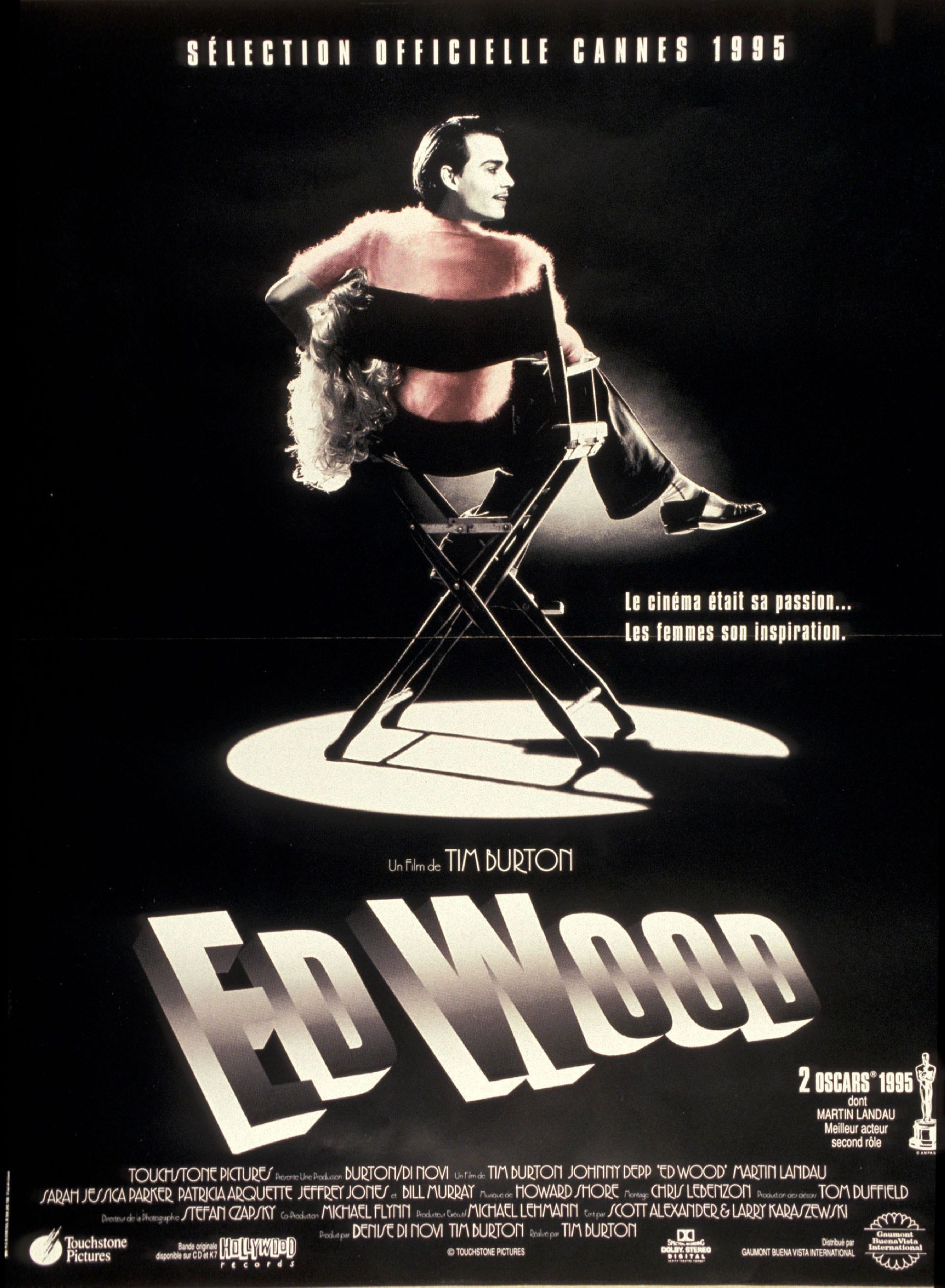
My Favourite Films - Ed Wood (1994)

Alright, the past two films have both being more of personal favourites so let’s talk about something that’s a bit more of an obvious critical darling. Ed Wood was released in 1994, directed by Tim Burton and starring Johnny Depp in the titular role, following the adventures of the man who is considered to be the worst director in Hollywood history, Edward D Wood Jr. Not to turn this into a history lesson but if you’re not aware of him, in the 1950s Ed Wood was a young aspiring filmmaker who made nothing but was it almost universally agreed to be objective garbage, all of his films were terrible and it’s amazing he was ever able to get any work done. And while that makes an interesting concept for a film, making a biopic on the worst director in history, I have no idea how accurate this film is to real life and frankly I don’t care, film is a storytelling medium, not a history lesson, if I cared about accuracy I’d watch a documentary. So whether or not Ed Wood did behave in the ways portrayed in this film or if any of the events actually happened and in this specific way, that doesn’t matter to me.

What makes this film work so well is the main character of Ed Wood, no real surprise there, there’s a reason I started a ‘My Favourite Characters’ segment before talking about my favourite films, because to me the most important part of any story is its characters. So obviously when your film is based around a single character, they better be damn interesting and…yeah he is. What works so well on a basic level of this film is Burton doesn’t try to portray Wood as a misunderstood artist, that his work is secretly masterpieces and no one can see the genius, nor go the complete opposite way and mock the man for his poorly made films. Wood was a terrible filmmaker, but seeing his reasoning and thought patterns for how he justifies his choices is fascinating to watch, a character walks into the set and screws up the take, any other competent director would have done it a second time, Wood claims that it’s “more realistic” to leave it in, it’s odd choices like that which really gives the audience a sense of this guy’s psyche and you completely understand why he is the way he is.

But what really makes the character so damn great is how passionate he is for filmmaking and this is the key theme of the movie and what makes it as good as it is. Even if Ed Wood is making terrible films, he’s getting to make the films he wants to make so why is that a problem? He gets to tell the stories he wants to tell and as Orson Wells puts it in the film “Don’t waste your life making other people’s dreams” which creates an interesting conversation about analysing art, intent of the artist and audience perception. Something that can’t be denied is just how passionate Ed is about making films, he loves everything about it, he loves getting to tell stories, he loves making sets, he loves expressing himself and his creativity and frankly, who the hell should care if it’s good? He thinks it’s good and he’s fulfilling his dream, it's not hurting anyone in the process so what's the big deal? In fact the best scene of the movie for me is when Ed meets his idol Orson Wells, despite the fact the two are complete opposites in both filmmaking styles and public opinion, the two have a surprising amount in common when it comes to why they want to make films and the struggles they face along the way. Also while I’m on the topic of Orson Wells, that’s not Vincent D'Onofrio doing the voice, it’s acclaimed voice actor Maurice LaMarche who for some reason goes uncredited.

And if this doesn’t hold up as one of the best Johnny Depp performances ever, yes while there is still some make-up, mostly with the fake teeth and the handlebar moustache, most of the performance relies solely on his ability to embody someone entirely different and he completely morphs himself into Ed Wood and it is surprising he didn’t get a nomination for this. Unlike his co-star Martin Landau playing the great Bela Lugosi who definitely does a fantastic job in the film and it’s scary how well he’s able to transform, the character just isn’t as entertaining to watch for me and I feel Depp is breathing just a little more life into the role (No pun intended).

The film also completely embraces the setting and sucks you into the time frame thanks to some great work from Directory of Photography Stefan Czapsky, not just with shooting in black & white but the lighting feels much more like a 1940s noir thriller, the sound quality isn’t the greatest and the score by Howard Shore makes it sound like a sci-fi creature feature of the time. All of these elements and little touches help the film come together and fit the time period and make it feel much more appropriate given the source material. So much more effort was put into the film to have it fit in with the setting than just filming in black & white, going the extra mile to make it a more engrossing experience.

This is just another example of why 1994 was one of the greatest years in cinema history, hell if not the greatest year. Big award pleasers like Shawshank Redemption, Pulp Fiction & Forrest Gump. As well as other classics like The Lion King, Natural Born Killers, Leon: The Professional, then you have classic crowd winners such as Speed, Dumb & Dumber, The Mask, Ace Ventura, True Lies, The Crow, etc. And now plastered alongside all these beloved movies is Ed Wood, which honestly still shocks me this film wasn’t nominated for any of the major awards outside of Best Supporting Actor. Depp gives a career highlight in what is arguably his best performance, Burton is doing his best directing job and considering the style and reputation he had at the time this was a vastly different project to take on and on top of that it has a ton of Oscarbait, shot in black & white, a period piece, under appreciated by general audiences but beloved by critics, set in the romanticised Hollywood while simultaneously acting as a criticism and pastiche of the exact same setting. Seriously how did this movie skip out on a nomination but Four Weddings and a fucking Funeral got nominated!?

So yeah, quick recap, great performances, great directing, great score, great cinematography, great sound design and above all else a great commentary on the creation of art versus public consumption & criticism. Absolutely one of the best.

-Danny

Friday, 30 September 2016

My Favourite Films - School of Rock (2003)

Image result for school of rock posterFirst let me talk about my history with this film. In 2003 when I was 8 years old my dad went to take me and my sister to see this film in cinemas, and that Monday when I went to school, everyone was talking about it. And over the next 10 years, this was the iconic film that every kid knew and loved. Whenever there was a film being shown at school, didn’t matter which class, it was always School of Rock, except for science which showed us the most scientifically inaccurate films like Volcano or The Core (Very odd, I know). So yeah, point is, I have kind of a history with this film. And while granted that element of being a childhood classic in my books certainly has an effect on my reflection of this film, I don’t think that means it’s without merit. Don’t get me wrong there is plenty of stuff in my childhood that to this day I love to death even though it’s really dumb and bad, but the thing is, I know it’s dumb and bad. I’m always going to love Pokémon but I’m not going to pretend the show holds up very well. So I’d like to think that provides me with some sort of immunity to nostalgia goggles, obviously not completely, after all it’s kind of impossible to separate a childhood classic and analytical mindset. If something had a positive impact on your childhood and influenced you in someway, that is a grip you can never free yourself from. With that being said let’s dive into this film.

School of Rock follows the story of a wannabee rocker Dewey Finn desperately looking for money so he poses as a substitute teacher, gets hired at a prep school and once he learns the kids are musically talented, forms a rock n roll band, keeping it a secret from the school, the kid’s parents and his best friend, the actual substitute teacher. Yeah, kind of a ridiculous premise but Richard Linklater, the director has always kind of been an experimental filmmaker. Dazed & Confused, Before Sunset, A Scanner Darkly & Boyhood are all unusual premises for films and you question if they could actually be made to work but Linklater always finds a way (For the most part). And in this film’s case he pulls it off like the expert he is, finding the perfect tone for a film like this and with a witty script by Mike White filled with great dialogue that is both funny and also finds a way to make this scenario believable, with likeable characters and good pacing, the film manages to find that suspension of disbelief that you so badly need with a premise like this in order for it to work in the first place.

However a great script and great direction mean nothing without a great lead, and in my opinion this is still Jack Black’s best role yet. True he has technically had more challenging roles that show his skills as an actor, as well as funnier roles that highlight his comedic side as well as roles that better showcase his musical talent. This is the role that fully embraces that kind of zany, kind of dumb, kind of charming rock n roll nut that gave Black the identity he’s best known for. Like Robin Williams in Mrs Doubtfire, Michael J Fox in Back to the Future or Keanu Reeves/Patrick Swayze in Point Break, the movie just does not work without him and no one else could ever play the role as perfectly as him.

But his character actually has more depth to him than you might think on a basic level. There’s a lot to be debated over what we should be teaching our kids and how we should be teaching them, but something that a lot of people have been debating over the years is that it’s more important to teach kids ideas and ways of expression over factoids that will most likely prove to be useless to them in the future, e.g. how many people don’t really need or care that the Mitochondria is the power house of the cell. Now obviously this is a topic with a lot of ground and what ifs that need to be covered and I am severely under-qualified to take part in it, but the basic ideas that we should be helping teach kids more about how to function as people is more useful than knowing about the Battle of Hastings is not a sentiment I disagree with. Thus here we have a character who-through very questionable, but successful methods-is able to help these kids with their issues, find a healthy form of self-expression, teach them new skills and overall make them more confident and happy as people. He teaches Zack the lead guitarist to stand up for himself and not let his parents control him, he gives Lawrence a sense of self-confidence, shows Freddy an outlet to express himself without resorting to bullying, helps Tomika get over her body issues. Even in some smaller cases his actions can mean a lot, when the obviously gay kid Billy (Who Dewey nickname’s ‘Fancy Pants’) says he wants to be the band’s stylist, Dewey doesn’t make any kind of a gay joke or even reference that that’s a non-confirmative gender role, he just says “You got it fancy pants” because this character is all about having the confidence to express yourself in whatever way makes you feel good as long as it’s healthy, of course he wouldn’t draw attention to this or mock him for it, and in the long run that would probably help that boy a lot. So yeah, Dewey Finn, he might not teach you things like maths or science, but damn if he doesn’t help make you a better person.

By the way just as a small note, how lucky were they to end up with this many good child actors? I mean true most of them don’t have that many lines of dialogue outside of the main band and Summer, played by future Nickelodeon star Miranda Cosgrove. But one of the unwritten rules of Hollywood is never work with animals or kids because it’s near impossible to get a good performance, but this film had the challenge of casting over a dozen kids, all of which looked roughly the same age, half a dozen of which had to be musically gifted and fit the physical criteria in some cases with very specific ethnicities, body types or personalities.

But hey, this is a film about Rock N Roll so how does it hold up on that end? Kinda brilliant. This was certainly one of those films that had a big influence on my own personal taste in music and to this day I’ve always felt my music preferences can be summed up in two genres, classic rock and Disney songs. So while this film did introduce me to a lot of great music, it also works as a great critical analysis on the genre. Dewey even has a great scene talking about the origins and intentions of what rock n roll is supposed to be and how while it is certainly a genre based around rebellion, it’s not so much rebelling to hurt the oppressor, but to uplift oneself, make you not feel ashamed of liking what you like and not letting anyone get you down for it. The film even subtly takes jabs at bad rock n roll, the band’s main rival for the battle of the bands competition and winner of the show-to which everyone thinks didn’t deserve it-was a cheesy rock n roll ballad with pretentious nonsensical lyrics meant to appeal to the mass audience with little artistic integrity. Which is interesting considering the film itself doesn’t make this observation, you just have to listen to the song and understand the intention given the context, so yeah, the film intentionally made a “So bad it’s good” song, which I didn’t think was possible.

What else needs to be said? This is one of those lightning in the bottle films where all the right people came together to make a truly outstanding film, perfect casting, perfect directing, perfect music, absolutely one of the best.

-Danny

Thursday, 29 September 2016

My Favourite Films - Teenage Mutant Ninja Turtles (1990)

You know when most people discuss their favourite films it’s important to set a precedence of what exactly their preferred type of movie is. Honestly I can’t think of a better example than an action/sci-fi/comedy adaptation of a popular children’s franchise set in the dark grimy underbelly of New York City with a heavy focus on distinct characters and their interpersonal relationships…Yeah that pretty much sums it up.

The Ninja Turtles franchise is one of those that I have always loved as a child, and while granted everyone likes bickering over which one the best adaptation is and usually their arguments can be summed up with “This one’s the best because it’s the one I grew up with” Which…yeah that goes true for me. But thing is I didn’t actually grow up on the live-action movie, I watched it once when I was 4, completely forgot about it and didn’t see it again until I was 17 and you know what? It’s a damn good movie and possibly the best adaptation of the Ninja Turtles franchise, or at the very least, the first good one.

While the original comic book works fine as a satirical take on the gritty comic books of the bronze age and one can appreciate the low budget indie becoming a massive success in a pre-internet era surviving just off of word of mouth, the comic itself…is just kinda okay by today’s standards. While the comic thrives as a satire, where it falters is in it’s own story and characters, by which I mean there is basically none, hell you can’t even tell the turtles apart, through writing or artwork. While the animated series, though still the most popular adaptation of the turtles I maintain is one of the worst. Again, I respect it for bringing the turtles into the limelight and without it the franchise would not be what it is today. But from a technical standpoint the show has horribly cheap animation, very poor writing and I’m just gonna say it, the voice-acting is pretty bad as well, yes most of the cast are voice-acting icons and have most definitely gone on to do better work, for this series it felt like none of them were providing their A-Game. Hell Rob Paulsen, the voice of Raphael would go on to play Donatello in the Nickelodeon animated series and he's 100x better there.

So when approaching this adaptation what do the filmmakers go for? Do they stick to the dark satirical nature of the source material or do they make it goofy and comedic to be closer to the more popular version of the time? Somehow, they found a way to be both. The film is shot with a very dirty and dark style to match the comic but also has plenty of comedic and almost cartoonish moments much like the animated series and it never feels forced or inappropriate, the story is dark where it needs to be and silly when it needs to be. To this day I still think no other adaptation has met the perfect blend, they’ve always gone either too dark or too wacky, to be able to maintain a tonal balance that well shows true talent. But it does more than find the perfect tone for the franchise, it also helps with the protagonists’ characterization. True while the original cartoon did most of the groundwork for Michelangelo and Donatello, Leonardo & Raphael never had much going for them. Raph played practically the same role as Mikey, just with a bit more of a sarcastic edge and Leo was…the leader. This film gave them much more of an identity, Raph became the aggressive and over-emotional hothead but with a caring heart deep down who would protect his family no matter what and Leo was the blind follower of Splinter dealing with his own insecurities as a leader without him. Almost every adaptation of the Turtles since have had these two constantly at conflict and this is the product that started that. So yeah, what we have here is an adaptation that not only perfects aspects of the franchise but also reshapes others and makes them even better, how often does that happen? Not very.

But hey it’s one thing to be a great adaptation, how does it stand as it’s own film? Well it’s still kind of a technical marvel. The costume work on the turtles themselves are outstanding, getting believable look suits to be this expressive and flexible when just walking and talking is impressive enough but the fight scenes could go down as some of the best in cinema history. Now it’s no Jackie Chan martial arts fight, but then again Jackie Chan didn’t have to wear a 60lbs body suit in every single scene, again one cannot underestimate how impressive it is that they got them this good. And all credit goes towards Jim Henson and his crew, because when you want impressive suit and puppet work you go to the master himself, and it just stands to reason how important his crew was because seeing as he didn’t work on any other live action turtles product, with every future instalment the suits would look worse and worse.

And like I said, the gritty viewpoint of the film with everything looking dirty, smoggy and dark goes great with the tone of the source material and shows the filmmakers really did understand the property and gives the film a unique style seeing as you don’t usually get kids’ movies looking this bleakly stylized outside of a Don Bluth film. And you know what makes all of this even more impressive? The fact that this was an independent movie. Yeah it’s kind of hard to believe that even during a time period where the Turtles were at their peak of popularity, Hollywood didn’t want to cash in on that so they made it independently. Not only is this again fitting considering the origins of the turtles, but it means this was truly a passion project and you can see where all of the effort was placed and they knew what the focus should be. It also means that you can be a little more forgiving of some of the technical issues, speaking of…

…Yeah this is why I say you shouldn’t expect films on this series to be cinematic marvels because if we’re being honest there are some very obvious production issues with this film. Mostly with the script, it is a very basic story and a lot of it doesn’t make sense. Shredder is recruiting kids in the city to steal random junk…because? In fact it makes even less sense considering Shredder has an army of ninjas at his beck and call, why not use them? Actually everything about the Shredder is kind of awful, from his look, to his plan, to how he was beaten. Also you can tell where they cut corners, some scenes seem poorly lit even considering the style, other times the cinematography looks cheap and the plot itself leaves much to be desired.

But like I said, the film knows where the focus should be and it’s on the turtles, like any good Ninja Turtles product. Also while the script has its flaws it doesn’t make it bad, especially in the dialogue, it’s charming, each character has a distinct voice even outside the turtles and that one joke from the cabbie makes me laugh every time.

Also the ranch scene is in my eyes still done brilliantly, an entire sequence where the movie just slows down and allows for a lot of character building and emotional pay-offs that you don’t really see enough of. Sure there are plenty of kids films that will slow down to have an emotional moment but it’s often too short to have an effect or it’s just not earned. This film earns the emotional payoff and is possibly the strongest moment in the film. And just as a final note the music itself is kinda great too. Partners in Kryme is a fun hip-hop song which helped form the musical identity between this genre and the Turtles franchise that would be continued (For better or worse) with Vanilla Ice, Juicy J, Wiz Khalifa, Ty Dolla Sign, Sebastian Evans II and Stanley Martinez. And the score by John Du Prez is has a nice upbeat tone that fits the usual style established from the cartoon but honestly the track 'All Fathers Care For Their Sons' is pretty beautiful and feels more like something out of Avatar: The Last Airbender.

So to sum it up, this film to me is a perfect adaptation of a franchise that at this point was yet to have a good product in it’s name and opened the doors for great adaptations in the future. From a technical aspect the effects are impressive, the script charming-if flawed-and with so much talent and passion behind it, how can I not considering it one of my favourite films?

-Danny

Wednesday, 28 September 2016

My Favourite Films - Introduction

Sort of a spin-off of ‘My Favourite Characters’ series, pretty self-explanatory that this will be me discussing some of my favourite movies of all time. Now something that I should make clear, as I am writing this, none of the movies discussed are currently one of my “all-time” favourite movies. Meaning if I were to publish my top 20 favourite films, none of these would be on it. Yes, granted this can change with time but as of right now, that is how I feel. They just happen to be movies I love, have watched multiple times, in some cases they’re obvious picks (Films such as Shawshank Redemption would be applicable for the series) and others they might not be as obvious or praised for their technical achievements or critical acclaim, but for purely subjective reasons I love them. Which is also why the first film to be talked about in this series is Teenage Mutant Ninja Turtles (1990). See ya tomorrow.

-Danny